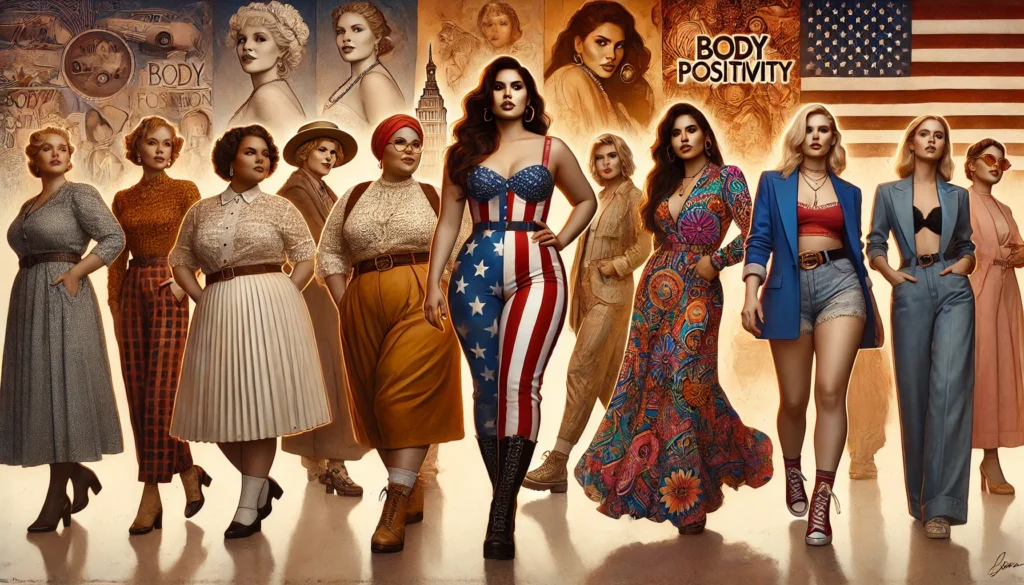
The Evolution of Plus-Size Fashion in the USA & Body Positivity
Plus-Size Fashion, US and Body Positivity
The fashion industry has developed a great deal in the recent past, especially in the plus-size clothing product sector. Traditionally a niche market, this segment of the industry has grown tremendously and is gaining more and more acceptance especially due to the body positivity craze. As a subculture, the plus size fashion has developed over the years in the USA to present more than the mere apparel, it is about deconstruction of the society, rejection of stereotype and acceptance of diversity.

Plus-Size Fashion History
The fashion industry especially in the most years of the 20th century has mainly focused on thin and small built people, isolating people of plus sizes. The term ‘plus size’ had its origin in the early twentieth century, but it was not until then that women or sellers could get accommodate by poor and mediocre styling. Larger women clothing were kept out of sight in small corners of large departmental stores without probably any good materialQualities.
By the 1980s and 1990s the direction changed as the consumers looked for something better. This was because some clothes seemed reserved for ‘plus-sized’ women and other brands such as Lane Bryant, established in 1904, began offering fashionable plus-size clothing. But the options remained somewhat scarce and, more significantly, this group of people remained marginalized within the fashion mainstream.
When the Body Positivity Movement Emerged
The general acceptance of plus size acceptation began in the early 2000s and popular trend known as body positivity. Gender minorities’ voices were one of the major breakthroughs initiated by social media which had been excluded in the fashion industry before. Social networks as Instagram and Twitter made it possible for a person to question stereotyped beauty standards and appreciate the fullness and curviness of female body.
The advertising campaigns that can be regarded as the hallmark of the battle for acceptance of the body diversity were accompanied by the well-known, such as, for example, “Real Beauty” by Dove in 2004. This campaign was an important one as it featured women of different size, age, and colour; which is quite the opposite from most conventional media.
Does Mainstream Fashion Finally Embrace Inclusiveness
It became possible to see more positive changes after the emergence of the body positivity movement urged mainstream fashion brands to think differently. Some of the well-known designers and retailers also started admiring the purchasing power of plus size consumers and diversity.
Towards the end of the decade, industry giants ranging from target and Old Navy to ASOS got into plus size clothing. Moreover, some established luxury fashion brands including Christian Siriano Use plus size models in his fashion show doing away with bigotry in the fashion industry . They also identified other blueprints such as Ashley Graham and Tess Holliday that continued to be included in fashion campaigns were an indication of change towards body diversity.
Plus Size Influencers
They have a great deal to do with how plus-size fashion has been marketed, promoted, and packaged. Other social media personalities include Nicolette Mason, Gabi Gregg popularly known as Gabi Fresh and Callie Thorpe whose pages mainly inspire plus-size women and feature affordable plus clothes. With their presence, they have not only encouraged consumers, but also compelled brands to grow their plus size and enhance their products.
Problems in the Sector
However, there is still much that can be done for plus-size fashion businesses As it is, plus-size fashion companies continue to experience unique challenges. It is sad that many brands today still restrict the sizes they make their clothes in, for instance, most companies provide clothes up to size 18 or 20 at the max. Besides, size inconsistency across brands is a thing that such buyers find very annoying.
The other problem is the lack of plus-size models on campaigns and magazines and any other media. Although movement has been observed in most campaigns, the reality is that larger individuals are still quite underrepresented. The term “plus-size” used has also raised concern, with many people calling for its complete removal from popular use in an effort to reduce labeling of people.
Taking care of Technology and E Commerce
E-commerce has really boosted the visibility of plus size fashion. Online stores like Eloquii, Torrid, and Universal Standard have quickly risen as giant players for pluss size women fashion with better style. These brands use high technology in providing better fit guides, virtual try-on solutions, and recommendations making the shopping experience unique.
More recently, there have been sites like Dia & Co that are subscription services to send fashion boxes to people of certain size preferences. All these changes have helped in widening on fashion for plus sized ladies out there on the market.
Five Years of Plus-Size Fashion
From the current trends in the USA, the future of plus size fashion seems bright marked by a continuous support on the issues of diversity. Newcomers to the fashion world and brands have realized that fashion is for everyone, and everyone has a right to be fashionable.
Furthermore, areas are being introduced which are related to the field of fashion, including but not limited to lingerie, activewear, and formal wear. Some upcoming designers like Savage X Fenty company by Rihanna has left so many barriers by providing many sizes of clothes and materials used in their latest collections besides, she has so many different models in her pictures.
The other trend influencing the future in plus-size fashion is sustainability. The global market shifts toward environmental conservation contribute to the need for plus-size clothes that fitted environmental conservation while manufactured.
Effectiveness of the Body Positivity Movement
Body positivity movement has brought light to the society and fashion industry in large ways. It has swung the numbers from just catering for plus size individuals to even embracing and promoting them. It has advocated for change of the sample of beauty and has been instrumental in promoting adoption of the plus size fashion.
The shift in culture has extended towards other areas like entertainment and advertising sector where change is gradually embracing the essence. The full-figured models are capable of motivating millions of people and giving them the desire to come out of the shadows and fight for it.
Conclusion
With the examples found in the United States, the advancements of plus-size fashion proves that advocacy, consumers and culture make the difference. Idealism is still a long way off, but even the most cynical observer must admit that substantial progress has been made over the last decade. Thus, body positivity remains to fight against the stereotyped beauty standards and includes meaningful development towards the future of fashion where every person looks appropriate what they see in the advertisements.
In this, I believe that it is critically important to avoid attempts at ‘dollarizing’ the industry and instead focus on honesty, inclusion, and constant creativity. As the fashion industry become more sensitive to needs of the society and accept all forms of diversity and embracing all sizes, the fashion world can be empowering to everyone.