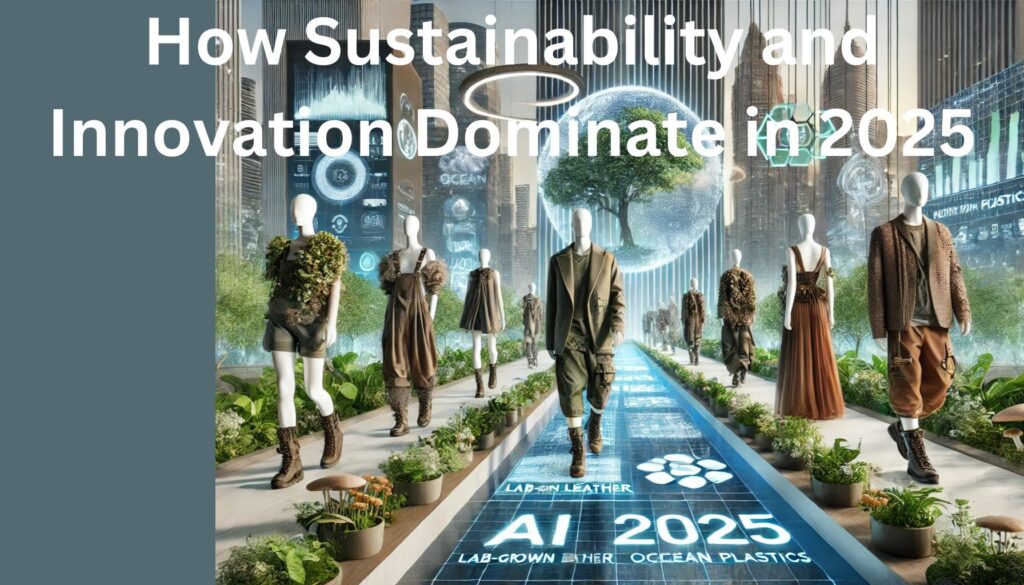
“Redefining Luxury: How Sustainability and Innovation Dominate 2025
Redefining Luxury: Why Sustainability and Innovation Control 2025
Fashion was always associated with richness, selection, and a perfect work of artisans and designers from the world of high-end products. However, in light of the increasing global environ mental and social crises that are unprecedented, the construct of luxury is changing in equal measure. In 2025, the landscape of luxury fashion is being redefined by two powerful forces: of sustainable development and innovation. It is a new way of thinking of luxury, far removed from excessive consumption that celebrates and advances Ethics, Responsibility, and Technology, that will define a future of luxury beyond the mere frill.
Conscious Consumerism as a Trend
The modern luxury consumer becomes not the passionate admirer of the status symbols. Rather, they look for brands that reflect their personal beliefs, with special focus on things such as integrity, ecological impact and corporate social responsibility. What’s more, millennial and gen-z consumers constitute a large part of the population that is expected to occupy an even a larger proportion of the luxury market. McKinsey’s research shows that in 2024, seventy-two percent of Generation Z consumers make decisions on what to purchase based on sustainability and ethical considerations.
To address this new change, luxury brands have been making sustainability a part of their operations. Currently, we can observe that main brands like Gucci, Stella McCartney, and Hermès are among brands actively enhancing their efforts in achieving goals as carbon neutrality, utilizing recycled materials, and implementing transparent supply chain. The days of luxury coming from opulence are fast being replaced by visions of luxury that are sustainable for the planet and its inhabitants.
Sustainability: This is why we can speak about the New Standard of Excellence.
They include one that recognizes the incorporation of sustainable practices into the luxury sector as one of the chief causes of this change. In 2025, luxury brands are not just trying out sustainable strategies; they are incorporating them into their brand’s fabric. This includes a commitment to:
1. Eco-Friendly Materials: Some of the economically liberal changes in textiles have produced environmental friendly wears such as organic cotton hemp and bamboo among others. In the same manner, hi-end brands are using elegant innovations viewed as sustainable including lab-grown leather, fabric made from mushrooms, plastics bought from the oceans among others.
2. Circular Fashion: Circularity, therefore, appears increasingly as a characteristic of luxury. Companies are integrating long-life design thinking, providing repair, and take-back initiatives to return products at the end of their usable life to a cycle in which they can be recycled or remodelled. The big brands such as Burberry, Prada, Gucci, among others are on the forefront implementing change towards sustainable fashion consumption.
3. Transparent Supply Chains: Privacy is now lost; it has become a norm to transparence. The general populace is now insisting on receiving information concerning the process of production of their preferred items. Blockchain is still helping brands to come out with facts regarding sourcing, production and environmental aspect and ensuring full transparency.
4. Carbon Neutrality: To ensure sustainable production, running and growth, attaining net-zero emissions is a goal of most luxury houses. Companies are spending on green power, green crops, and carbon buy-ups to reduce the impact on the environment. For instance, LVMH has ensured that they would be carbon neutrality by 2030 within its operations.
Innovation: The Future of Luxury
Another important strategy that luxury reimagines in 2025 is innovation. Starting from TFTs to futuristic designs luxury brands are now taking up innovation as a solution to cope up with modern problems. Key areas of focus include:
1. Wearable Technology: The thin line between luxury and technology is blurred more and more as it produces clothing that is fashionable as well as practical. Clothes with the use of sensors can effectively provide health information and modify the climate within a wearer’s garment.
2. 3D Printing : The current trend adopted by luxury products designers is the use of 3D printing technology in designing an developing their products. This technology allows brands to use tailor-made pieces of high accuracy, in addition to minimizing the waste. Fashion designers are increasingly using 3D printing in creating creative pieces of jewelry, dazzling shoes and trendy clothes.
3. Digital Fashion: We have learnt that due to advance in technology and the emergence of the metaverse and digital fashion, the definition of luxury is evolving as well. Digital showrooms are now producing unique digital clothes for avatars, which embrace innovative artistic concepts along with the technologies of the latest generations. There is a positive trend in this phenomenon, as it not only contributes to a decrease in the ecological footprint directly related to the physical creation of the product but also expands the range of opportunities for earning additional income for luxury brands.
4. Artificial Intelligence (AI): How artificial intelligence is changing the customer touchpoints in luxury. Whether the ability to shop assistant, or the ability to virtually ‘try on’ products, AI is helping brands deliver highly personalized services. Furthermore, the analysis with the help of Artificial Intelligence is being used to cut down the costs of inventory management.
Tradition in Contemporary Creation
Although, the future of luxury is sustainability and innovation, every aspect of the luxury industry is grounded in history. Heritage brands’ have, therefore, been trying to create a balance between tradition or history and the contemporary. For example, Chanel and Dior have followed classics of their collections but have also adapted with environmentally friendly solutions and the development of the materials of science fiction.
Many concepts classed as luxurious are also changing, and craftsmanship is amongst them. Craftsmen have been working hand in hand with technologist in coming up with the products that incorporate traditional art forms with modern technology. This aspect shows that even when the advertising trade attaches more importance to the painting aspect of luxury, and thus projects the ‘modern’ luxury, there is the fact that Dyson intertwines past ideals of luxury with present day ones to show that luxury is never out of style.
Collaboration and Partnerships
As the year 2025 approached, institutions are increasingly using collaboration as an effective approach to enhancing sustainability and ideation. Senior fashion and luxury brands are collaborating with technology disruptors, sustainability specialists or even rivals to learn and exchange information. Such efforts as the Fashion Pact which is the largest companies agreement on climate for fashion sector are the examples of the collective approach.
These collaborations with artists, designers and activists are also injecting new ideas to the luxury industry. Such collaborations do not only lead to the production of novelties but also ensure maximum communication of sustainable and innovative practices.
Challenges and Opportunities
In the current generation, it is increasingly possible to identify the main challenges and opportunities in the real estate industry.
The process of transforming luxury definition is not an easy one. The elevated cost of production of eco-friendly fabrics and the utilization of sophisticated techniques are still unachievable by most labels. Also, increasing transparency in predominantly multifaceted supply chains is a sheer challenge.
But these also offer the possibilities for development and the establishing of distinct positions or niches. In this respect, on investing in research and development retailers particularly luxury brands can invent solutions that would give them edge in this field. Furthermore, it is important to raise the consumer awareness about the benefits that can deliver sustainable and innovative behaviors enhancing the level of commitment.
Conclusion: The New Face of Luxury
Luxury by 2025: New Values ‘Luxury today and in 2025 does not equal opulence and selectivity.’ Instead, it has focused on its sustainability, innovation and its purpose of creating value for clients. The impact of green practices and concepts such as uberizing and on-demand production is that the increased use of sustainable materials and technologies, together with the demand for transparency in operations, is pointing the industry toward the right direction.
Consumers expect coziness and Luxury in a new way – sustainable, innovative . This change is a result of a new, more conscious approach to consumption and the development of technology. To sum it up, positioning luxury brands according to the outlined characteristics not only makes them relevant in the modern world but also helps to create a better future for all. This is the future of luxury, and this is as beautiful as it is empowering.